Letter to the Editor
Author: Michael J Lohman
Article Published: 12/05/2025 Volume: 4 Edition: 22Letter to the Editor
Fort Harrison is home to the “Residential Rehabilitation Treatment Program” (RRTP). The program began in 2011 as the “Trauma Recovery Unit” (TRU) and changed to RRTP in 2020. There are two groups/programs: the Post Traumatic Stress Disorder and Substance Use Disorder groups. The PTSD group runs six weeks and the SUDS - four weeks (though some elect to stay longer).
During your stay, one can expect to live in a controlled environment where regular urinalysis, breathalyzer, and contraband checks (including room searches) are conducted. Those aren’t too bad; you get used to them. The staff wants to make sure you’re as committed to the therapy as much as the crew is to provide you with care, and they do. Meals are provided (you get to choose what you want and really slick, they have diabetic menus with the carb content identified for you – provided you indicate you are diabetic), there are laundry facilities with soap (don’t bring “pods”), an adequate workout area, and day rooms which contain televisions, microwaves, and coffee makers. If you forget something, there are weekly trips to local stores and the small shop located near the Canteen. They even have reasonably priced laptops and the staff at either is incredible! You may even see a familiar face there too. Cell phone use is permitted, and Wi-Fi is provided for wireless devices. I used Mac, Windows [10 & 11], and various Linux flavors on the system with no issues. If you drive yourself, parking is located on the other side of the complex in an RRTP-specific area.
Treatment plans are personalized. Not everyone coming here will have the same plan, they often are different, and, since we’re human – may be in a different place in their recovery. We all respect giving one another the room/support they need. Some people are in a good place, some not. Social interaction is highly encouraged – as demonstrated by the two weekly two-hour and two four-hour passes – four total, five when there’s a holiday; naturally, visitors are allowed. Regardless, most will appreciate the therapeutic environment, structured routine, supportive community, and the availability of aftercare planning. They are not just going to cut you loose afterward; the care goes on. While there, 24/7 care and support are provided as well. The nursing staff is available around the clock and they’re ALL wonderful. The staff’s great too. Many are either veterans themselves, come from a military background, or are married to a veteran/active-duty member. They don’t just preach to veterans; they live as part of our [family/] community.
So, what to expect? There are classes highlighting Cognitive Behavior Therapy (CBT) and Cognitive Process Therapy (CPT) to veterans. Sorry, families, due to the nature of the treatment, only the veteran can stay, but veterans can be accompanied by a certified service animal. Training provided is in a recovery-oriented approach that recognizes individual strengths, values, and goals. Process groups where the nursing staff presents subjects, a devotional group, AA meetings, various community groups, an After Care group consisting of former patients, and trips to area museums. There are also trips sometimes to the hot springs, Mt. Helena trails, and Equine therapy. Emotional support dogs come in and there are sweats and talking circles (either outside or in a teepee, scheduled as well). There’s the clay arts trip to make your own ceramics as well. Other stuff just appears as well. Last time I was here, we saw “Almost, Maine” in the Civic Center. Did I mention it’s a great place to walk – just look out for the deer they are everywhere and magpies may even follow you around. Squirrels play and short-term residents’ cats may provide some hilarity as well.
While you are here you can see the Veteran’s Service Officer, Veteran Justice Outreach, get temporary housing, and be put in touch with a host of other services, including Vocational Rehabilitation. This is an incredibly well-rounded program that can help set you up with others before you leave here.
So how do I get there once I am in? The entrance is on the northwest side, building number 169, entrance 9. The parking lot is on the north/northwest side of the complex. You can drop people off in the traffic circle; there are a couple of hand carts available for your gear (bring a good pillow and earplugs – the halls echo), but you’ll need to move your vehicle out of the circle after unloading. It is an emergency area. One very important thing is that this is a non-smoking establishment. Federal lands prohibit smoking on campus, but you can walk down to the front gate if you would like to. VA police will fine you if you’re caught.
So, for veterans in need, how do I get into the program? You can have a VA counselor ask for you or call to see if there are vacancies. 24 people can be treated at one time, up from 8 when I initially came through, so chances of getting in are much better.
Is it worth it to get life together if you believe it is falling apart? Only you are qualified to say that, or a professional. These people are here for us and willing to go above and beyond to make sure we don’t go on sacrificing when we need not to. Give them a chance while you are giving yourself a chance. It is, indeed, a life changer. Will it be for me? I am not sure, but it’s better to have tried than not to have tried at all.
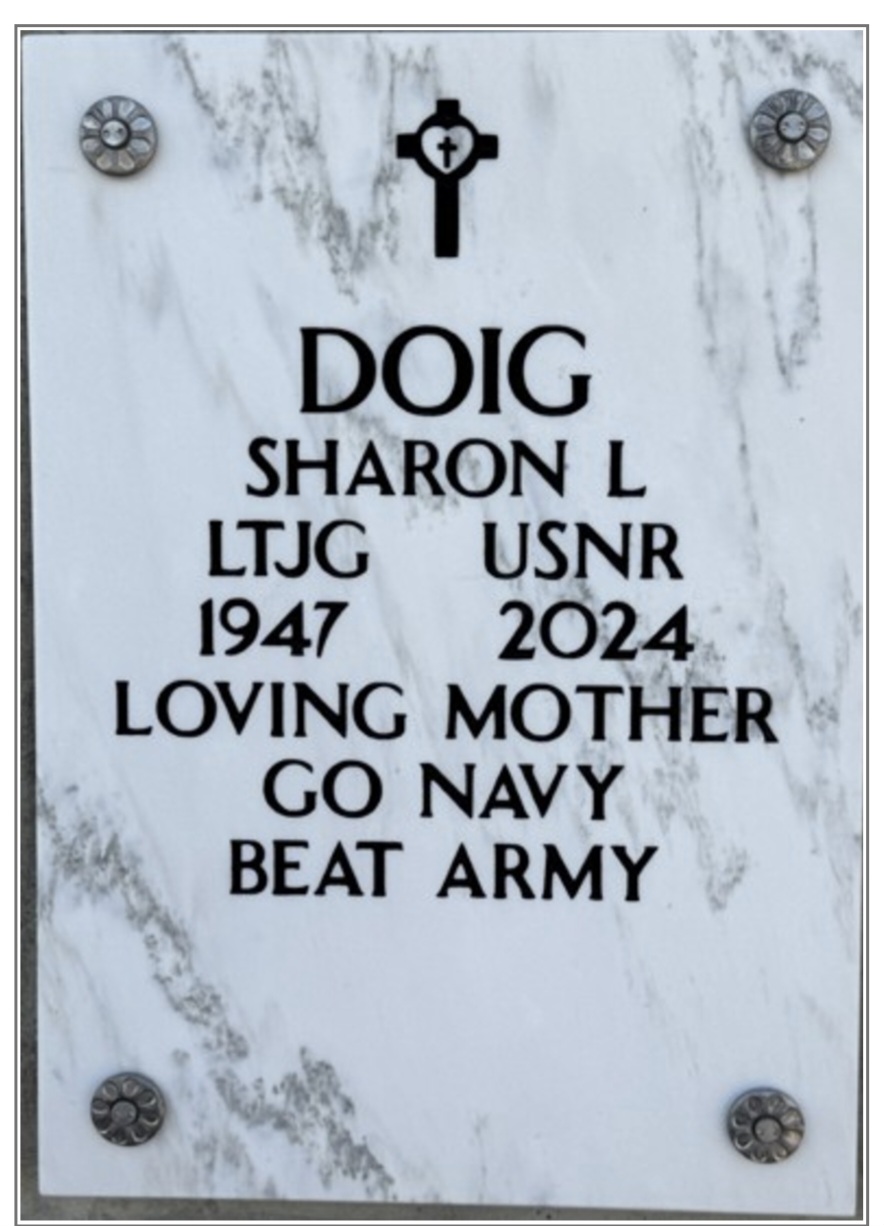
I knew I would have visitors myself, and indeed I have. I was never truly alone up here myself; I have my extended military family and two people who will always be here for us: Sharon Doig and Roland Heaton.
Michael J Lohman
Townsend, MT 59644
Article Images
Click on Image Thumbnail(s) to view fullsize image
Image 1 Caption: Sharon Doig Headstone
Photo Provided
Image 2 Caption: Roland Heaton Headstone
Photo Provided