Weed of the Month: Canada Thistle
 | Author:
Allison Kosto, MSU Broadwater County Extension Agent
MSU Broadwater County Extension Agent |
Article Published: 10/31/2025 Volume: 4 Edition: 17Weed of the Month: Canada Thistle
Allison Kosto
MSU Broadwater County Extension Agent
You can find thistles everywhere, in town, lawn, pasture and native rangeland. In Montana, there are five exotic and ten native thistles. Only one exotic thistle, Canada thistle, is on the state noxious weed list. It’s important to be able to tell the difference between exotic and native thistles. Exotic thistles spread quickly, reduce forage value, can limit recreational activities and injure wildlife or livestock.
Description & Habitat
Despite its name, Canada thistle is native to Europe, North Africa and Asia. It came to North America in contaminated grain in the 1600s and was found in Montana in 1881. It is now in every county, covering 1.5 million acres and spreading. Canada thistle tends to prefer moist areas and can be found almost anywhere from fields, cropland, meadows, roadsides and forests.
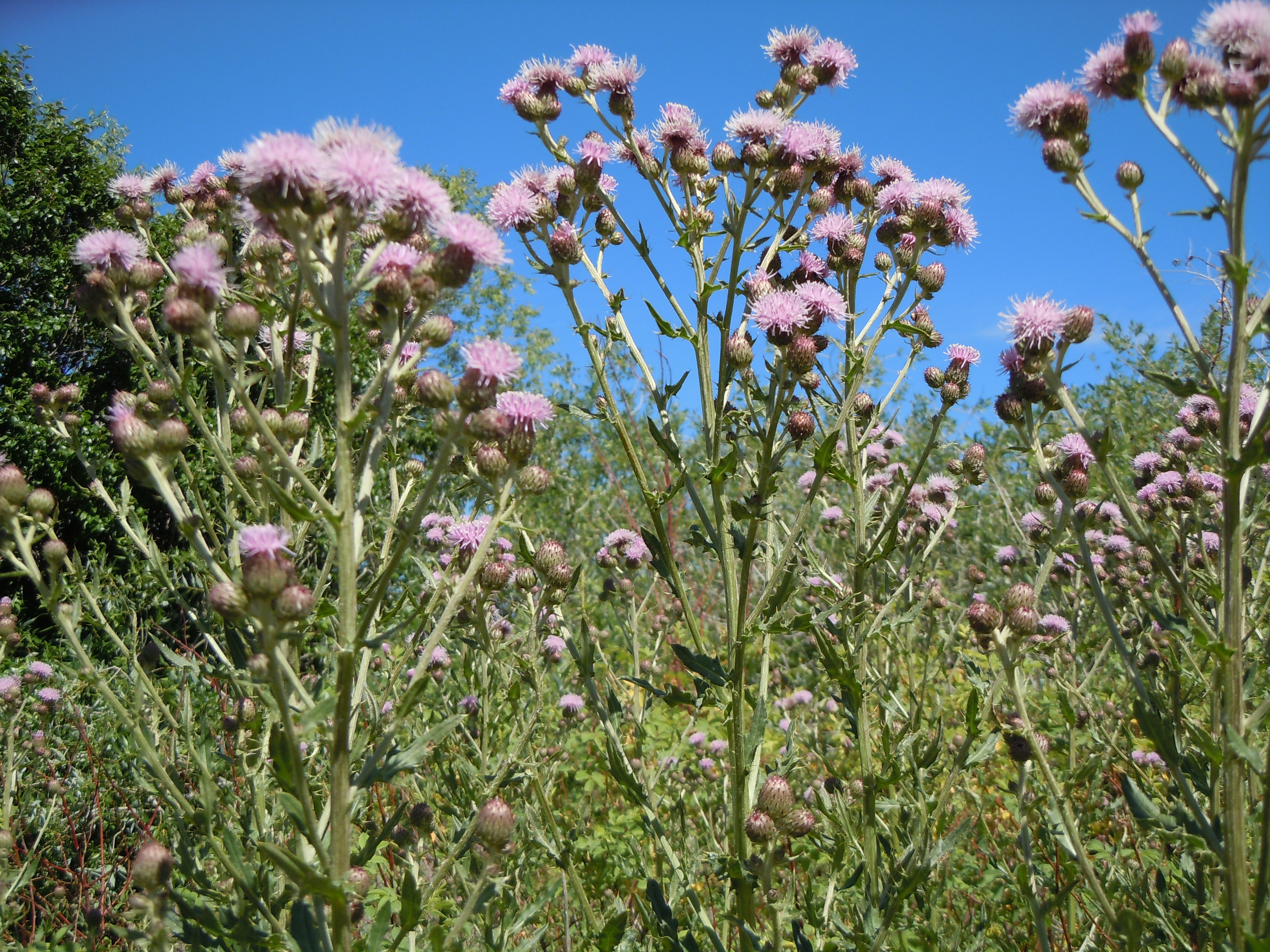
Thistles can be difficult to tell apart, especially in early spring when they are still in the rosette stage. Canada thistle is a perennial (lives more than two years). It emerges in the spring from root buds or seeds to form a low growing rosette. Plants formed in the spring will develop an upright stalk which will flower. Plants formed in the late summer or fall will not produce upright stems until the next year. Mature plants can be up to five feet tall and will flower between June and August. Flowerheads are relatively small, usually purple, although white flowers can occur. One of the features that makes it highly competitive is its rhizomatous root system. This means it is able to send out underground shoots from its roots that form new plants and dense colonies of thistle.
Canada thistle’s impacts are far reaching from the field to the yard. It is estimated that it causes $100 million annually from control and losses. It can reduce yield in alfalfa by 48 percent on fields grown for seed production with an additional ten percent reduction from extra seed cleaning. On rangeland and pastures, Canada thistle reduces productivity, crowds out desirable species and limits recreational use. It reduces grazing because cattle do not want to graze close to the plant due to the spiny leaves. In gardens and lawns, it is difficult to control and is a major nuisance due to its intensive root system.
Management
You can play a role in reducing the spread of seeds. Vehicles are a large spreader of seeds even in dry conditions. If you are on land with weeds, wash vehicles, ATVs and any equipment before taking it home. Do not drive or walk in areas that are heavily infested if possible. Purchase certified noxious weed seed free hay.
Cultivation is typically not recommended as a control method as the plant has the ability to reproduce from small root fragments. Mowing can be effective if done 2 to 4 times a year for multiple years. Mowing in late June, when root reserves are lowest, may give the best results. Burning, hand pulling or grazing are either not effective or not practical.
Biological control has been a challenge with Canada thistle. In order for new biocontrol to be released, they go through intensive testing to ensure they will not injure native or non-target species. Because there are so many other thistle species, it has been difficult to find effective biocontrol agents that affect Canada thistle alone. Two insects and two pathogens that have been released with limited success. Recent research has been done on a Canada thistle rust fungus that is showing promise, but is still in the early years of research.
Selective herbicides can provide good control and are often most cost effective in small or new infestations. The best time to spray is early spring or fall at the rosette stage. Commonly used chemicals include Curtail, Grazon P&D (restricted use), Milestone, Tordon (restricted use), Transline, Plateau or Telar. Always read and follow the entire label when applying herbicide. Common chemical names are used for clarity but does not imply endorsement of a product or brand.
For assistance with weed identification and control, contact the MSU Extension Office in Broadwater County at 406-266-9242 or allison.kosto@montana.edu. Broadwater County has a cost share program for controlling noxious weeds, including Canada thistle. For more information, contact the Broadwater County Weed District at 406-266-9243.
Article Images
Click on Image Thumbnail(s) to view fullsize image
PhotoCredit: Matt Lavin, Bozeman MT
Image 1 Caption: Canadian Thistle
Photo Credit: Matt Lavin, Bozeman MT